
Denim Sizing for Jeans That Feel Like You
A great pair of jeans can make a simple knit, ruffle-sleeve top or favourite trainers feel instantly more considered. The challenge is that denim sizing is rarely as straightforward as the number on the label. A size that feels perfect in one cut may feel restrictive in another, while the same waist measurement can sit entirely differently depending on the rise, fabric and finish.
Rather than chasing a single ‘correct’ size, look for the fit that lets you move comfortably and feel like yourself. Denim should support your style, whether you prefer a polished high-waist skinny jean, a relaxed straight leg or a softer wide-leg silhouette.
Why denim sizing varies so much
Jeans are built to fit around movement, not just measurements. That is why two pairs marked with the same size can feel noticeably different. The difference may come down to the fabric composition, the cut through the hip and thigh, or where the waistband is designed to sit.
A rigid cotton denim often starts with a closer, more structured feel and eases with wear. Stretch denim has added elastane, allowing it to mould to the body more quickly. Neither is better. Rigid denim brings a classic, shaped finish, while stretch denim can feel more flexible for long days, travelling or occasions when comfort matters as much as silhouette.
The wash can matter too. Darker denim often feels slightly firmer at first, while heavily washed or distressed styles may have a softer hand feel. Treat the size label as a useful starting point, not a verdict on what will fit beautifully.
Start with three measurements
For more confident online shopping, take your measurements over lightweight clothing or directly against the body. Use a soft tape measure and keep it level, without pulling it tight. You only need three numbers to make a much clearer choice: your waist, fullest hip and preferred inside leg length.
Your natural waist is usually the narrowest point of your torso. For high-rise jeans, this measurement is especially helpful, as the waistband is designed to sit closer to that area. Measure your hips at their fullest point, generally around the seat and upper thigh. This gives the best indication of whether jeans will feel comfortable when you sit, walk and move through the day.
For inseam, measure from the top of the inner thigh down to where you want the hem to land. If you already own jeans with a length you love, lay them flat and measure the inside seam instead. This is often the easiest route to a reliable reference point.
When comparing your measurements with a size chart, check whether it refers to body measurements or garment measurements. A garment waist can be smaller than your body measurement if the denim has stretch, or larger if the jeans are designed for a relaxed fit. The product description should also tell you whether a style runs fitted, true to size or oversized.
Choose your size by the fit you want
The best size depends on the look you want from the jeans, not just the closest number. A skinny or slim fit should feel close through the waist and leg without digging in at the waistband or pulling sharply across the hips. If you need to lie down, hold your breath or unbutton them after lunch, the fit is too tight.
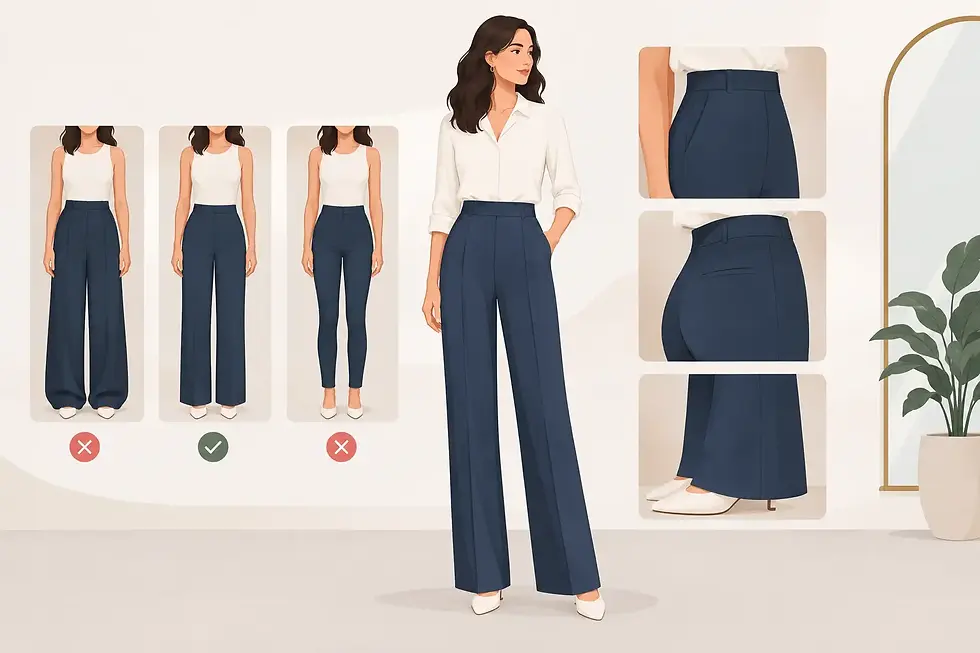
Straight-leg jeans should skim rather than cling. They may feel more relaxed through the calf, but the waist should still feel secure enough that you are not constantly adjusting it. For wide-leg and relaxed denim, focus on the waistband and hip fit first. Extra room through the leg is part of the design, not a sign that you have sized up too far.
If you are between sizes, fabric is the deciding detail. In jeans with noticeable stretch, the smaller size may settle into a smooth, comfortable fit after an hour or two. In 100 per cent cotton or low-stretch denim, choosing the larger size can make sense if the smaller one feels restrictive from the start. Cotton does give a little with wear, but it should never begin painfully tight.
A useful test is to sit down, take a few steps and lift one knee. Check that the waistband stays in place, the front does not bunch excessively and the seat does not feel strained. A mirror can help, but comfort tells the fuller story.
Rise changes everything
The rise is the distance from the crotch seam to the top of the waistband. It has a major effect on both comfort and proportion, which is why a pair of jeans can technically fit yet still feel wrong.
High-rise denim sits at or above the natural waist. It can create a clean, lengthened line and pairs beautifully with tucked-in tops, cropped cardigans and fitted knitwear. It is a timeless choice when you want a little more structure through the midsection, but it needs enough room at the waist to stay comfortable when seated.
Mid-rise jeans usually sit between the hips and natural waist. They are an easy everyday option for those who prefer less coverage around the waist or wear longer shirts and jumpers. Low-rise denim sits closer to the hip and can create a more relaxed, trend-led look, though the hip measurement becomes especially important to avoid gaping at the back.
There is no universally flattering rise. The right one is the rise that suits the way you like to dress. Try thinking about the tops already in your wardrobe: a high rise may make your favourite tucked-in blouse feel complete, while a mid rise may be the natural match for an oversized sweatshirt.
Read fit details like a stylist
Product details can answer questions that a size number cannot. Look for the fabric blend, rise, inseam and notes on fit. Words such as ‘sculpting’, ‘body-hugging’ and ‘snug’ suggest a close fit, while ‘relaxed’, ‘easy’ and ‘boyfriend’ signal more room.
Model information can be useful, but use it thoughtfully. If a model is wearing a certain size, compare their listed height and measurements with your own rather than assuming the same size will translate perfectly. A different torso length, hip shape or styling preference can change the result.
Reviews can also reveal patterns. If several shoppers mention that the waistband comes up small, the denim stretches with wear or the length is generous, that is more valuable than a general statement that a pair ‘looks great’. Pay particular attention to reviews from people who mention a similar height or the same fit concern you have.
Avoid the most common denim fit frustrations
Waist gaping is one of the most frequent issues, especially when your waist is proportionally smaller than your hips. A contoured waistband, higher rise or fabric with a small amount of stretch may help. If the hips fit but the waist gaps dramatically, sizing down can create discomfort elsewhere, so a different cut is usually the better answer.
Jeans that pull across the front of the thigh often need more room through the hip and upper leg, not necessarily a looser waist. A straight or relaxed cut can offer the ease you need while keeping the outfit refined. On the other hand, excess fabric at the lower back and seat may mean the rise is too long or the fit is too roomy through the hips.
Length is worth considering before you buy. A full-length wide leg can look elegant with boots or heels, while a cropped straight leg works well with loafers and trainers. If the inseam is slightly long, a simple alteration can turn good jeans into a pair you reach for constantly. If the rise, waist and hip fit are right, hemming is often the easier compromise.
Care for the fit you found
Once you find denim that feels right, wash it thoughtfully. Turn jeans inside out, wash them less often where possible and use a cooler setting to help preserve colour and shape. High heat can affect fibres with elastane and may encourage unwanted shrinkage, particularly in more fitted styles.
If rigid denim loosens after several wears, a wash can bring back some structure. Stretch denim should recover after washing too, although frequent heat drying can reduce its longevity over time. Caring for your jeans well keeps their colour richer, their fit more dependable and their place in your wardrobe longer lasting.
The most flattering jeans are not the pair with the smallest number on the label. They are the pair that sit comfortably, move with you and make getting dressed feel effortless. Trust the measurements, notice the fabric, and choose the silhouette that gives your personal style room to show.


Comments