
How to Build Personal Style That Feels Like You
Your most-worn outfit is rarely the one that looked best on the hanger. It is the combination you reach for on a busy morning, feel comfortable wearing all day, and still like when you catch your reflection later. Learning how to build personal style starts there: not with a complete wardrobe overhaul, but with noticing what makes you feel unmistakably yourself.
Personal style is not a rigid aesthetic or a set of rules to follow. It can be polished one day, playful the next, and still feel cohesive. A cable-knit jumper, high-waist denim, a bright scarf or a graphic sweatshirt can all belong in the same wardrobe when they reflect the life you lead and the details you genuinely enjoy.
Start with the clothes you already choose
Before buying anything new, look at what is already earning its place in your wardrobe. Pull out the pieces you wear repeatedly, rather than the pieces you think you ought to wear. Perhaps it is a soft neutral knit, well-fitting trousers, slim jeans, a ruffle-sleeve blouse, or a necklace that makes even a simple T-shirt feel finished.
Ask yourself what these favourites have in common. Notice their shape, fabric, colour, level of comfort and mood. You may find that you prefer a defined waist, relaxed sleeves, clean lines, tactile knits or a little unexpected colour. These are not small observations. They are the beginnings of a clear point of view.
It helps to separate clothes into three groups: pieces you wear often, pieces you love but do not know how to style, and pieces that no longer suit your life. The middle group deserves a second look. A patterned blouse may need simpler trousers. An expressive bag charm may make more sense on your everyday tote than saved for a special occasion. Style often becomes clearer through better combinations, not more shopping.
How to build personal style around real life
Your wardrobe should work for your actual week, not an imaginary one. If you spend most days commuting, working, meeting friends or doing the school run, the foundation of your style needs to meet those moments with ease. Occasionwear can be beautiful, but it should not take up the space needed by clothes that support your everyday confidence.
Think about the settings you dress for most often and the version of yourself you want to bring to each one. A professional wardrobe does not have to mean severe tailoring. It might mean sleek trousers with a feminine knit, dark denim with a refined top, or a simple dress finished with distinctive jewellery. For creative plans and relaxed weekends, the same staples can feel fresher with graphic details, colourful accessories or a playful print.
The goal is not to look identical everywhere. It is to create a thread that follows you from one setting to another. That thread could be elegant simplicity, a love of texture, a strong denim collection, gold-toned jewellery, or an affinity for joyful details.
Create two or three outfit formulas
An outfit formula is a reliable combination that you can repeat without looking repetitive. It removes the pressure of starting from zero while leaving plenty of room for personality.
One formula might be high-waist skinny jeans, a softly structured top and a necklace. Another could be tailored trousers, a fine knit and a statement scarf. For off-duty days, try relaxed denim, a graphic sweatshirt and a polished accessory. Once you know the silhouettes that make you feel good, getting dressed becomes quicker and more creative.
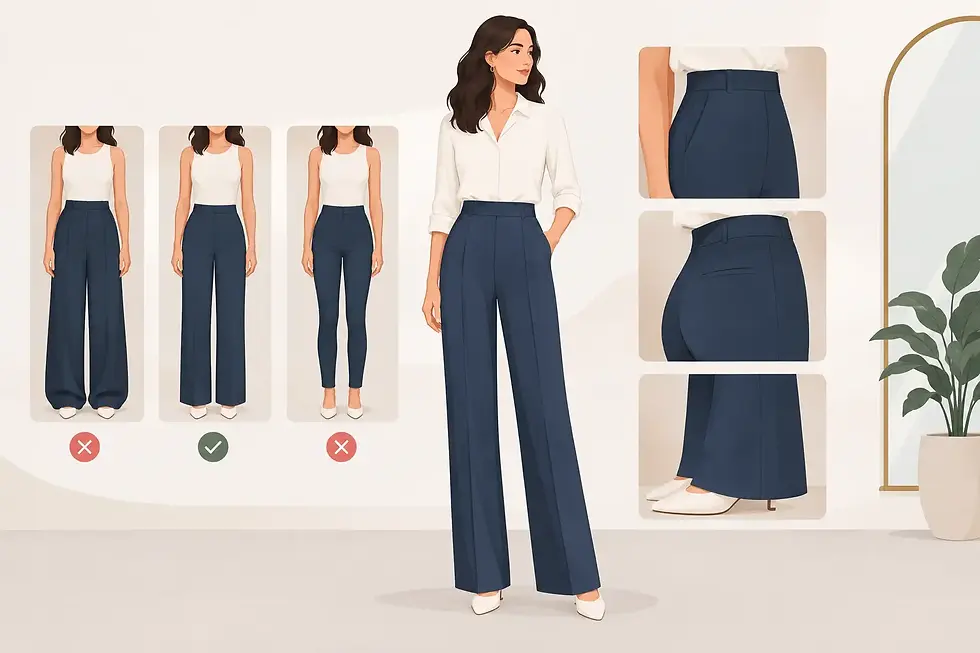
Keep the formula flexible. If fitted jeans are your anchor, balance them with a looser jumper or a ruffle sleeve. If you prefer wide-leg trousers, pair them with a closer-fitting top to define the shape. There is no requirement to follow every trend, and no single silhouette suits every mood. The best formula is the one you want to wear again.
Choose a palette, then make it personal
A thoughtful colour palette makes a wardrobe feel more connected, especially when you enjoy mixing classics with statement pieces. Start with two or three reliable neutrals you already wear well. Black, cream, navy, denim blue, chocolate and soft grey are all useful options, but your best neutrals are the ones that make getting dressed feel effortless.
Then add colours that bring energy. This may be a rich red, forest green, powder blue, pink, cobalt or a playful print. You do not need to restrict yourself to a narrow range. Instead, make sure each new colour can work with at least two of your dependable base pieces.
Prints deserve the same consideration. A graphic sweatshirt or illustrated accessory can be the focus of an outfit, while the rest stays clean and simple. If you love more than one print, repeat a colour between them or keep the silhouettes streamlined. The result feels intentional rather than overly matched.
Let accessories do some of the talking
Accessories are often where personal style becomes visible. They can change the feeling of wardrobe staples without demanding a new outfit every time. A delicate necklace makes a crew-neck knit feel considered. A colourful scarf adds movement to denim and a plain tee. A leather bag charm brings character to an everyday bag in seconds.
Choose details that feel like small signatures. You might favour sculptural earrings, layered necklaces, soft scarves, bold charms or a particular family of colours. The point is not to add everything at once. One expressive finish can carry an entire look.
There is a trade-off worth remembering. Statement accessories bring instant personality, but they work best when the outfit has room to breathe. With a ruffled blouse, choose simpler jewellery. With a minimal knit and trousers, allow the necklace or scarf to take centre stage. Balance makes even playful styling look polished.
Shop with a gap list, not a mood
A striking piece can inspire a purchase, and fashion should still feel fun. Yet the most satisfying wardrobes are built when every new item has a role. Keep a short gap list on your phone: perhaps you need a versatile cardigan, dark trousers for evenings out, an elevated top for dinners, or jewellery that works with open necklines.
Before adding something to your wardrobe, picture three outfits you could make with it now. Consider the fit, care needs and whether it suits the climate and routines you actually have. A beautiful item that needs constant adjusting or special planning may not become a favourite, however good it looks online.
This does not mean every purchase must be practical. A comic-style sticker, a vibrant charm or an expressive hoodie can bring delight and show a different side of you. Just give those pieces a supporting cast of reliable staples. Timeless elegance and a little visual energy are not opposites.
Test your style in ordinary moments
Personal style needs wear time. Try new combinations for errands, coffee dates, work-from-home days or casual lunches before relying on them for an important event. Take a quick mirror photo when an outfit feels especially right. Over time, these images will show you the proportions, colours and finishing touches that consistently work.
Pay attention to comfort as closely as appearance. The right style should allow you to move, sit, travel and get on with your day. Confidence is difficult to fake when you are pulling at a hem or worrying about a neckline. Tailoring, the right underlayers and sensible footwear can make more difference than another new trend.
Give yourself permission to edit as your preferences change. What suited you a few years ago may not reflect how you want to show up now. Style is allowed to evolve with your work, your confidence, your social life and your sense of play.
The next time you get dressed, start with one piece that feels reliable and add one detail that feels exciting. That small decision is enough to make an ordinary outfit feel more like your own.


Comments