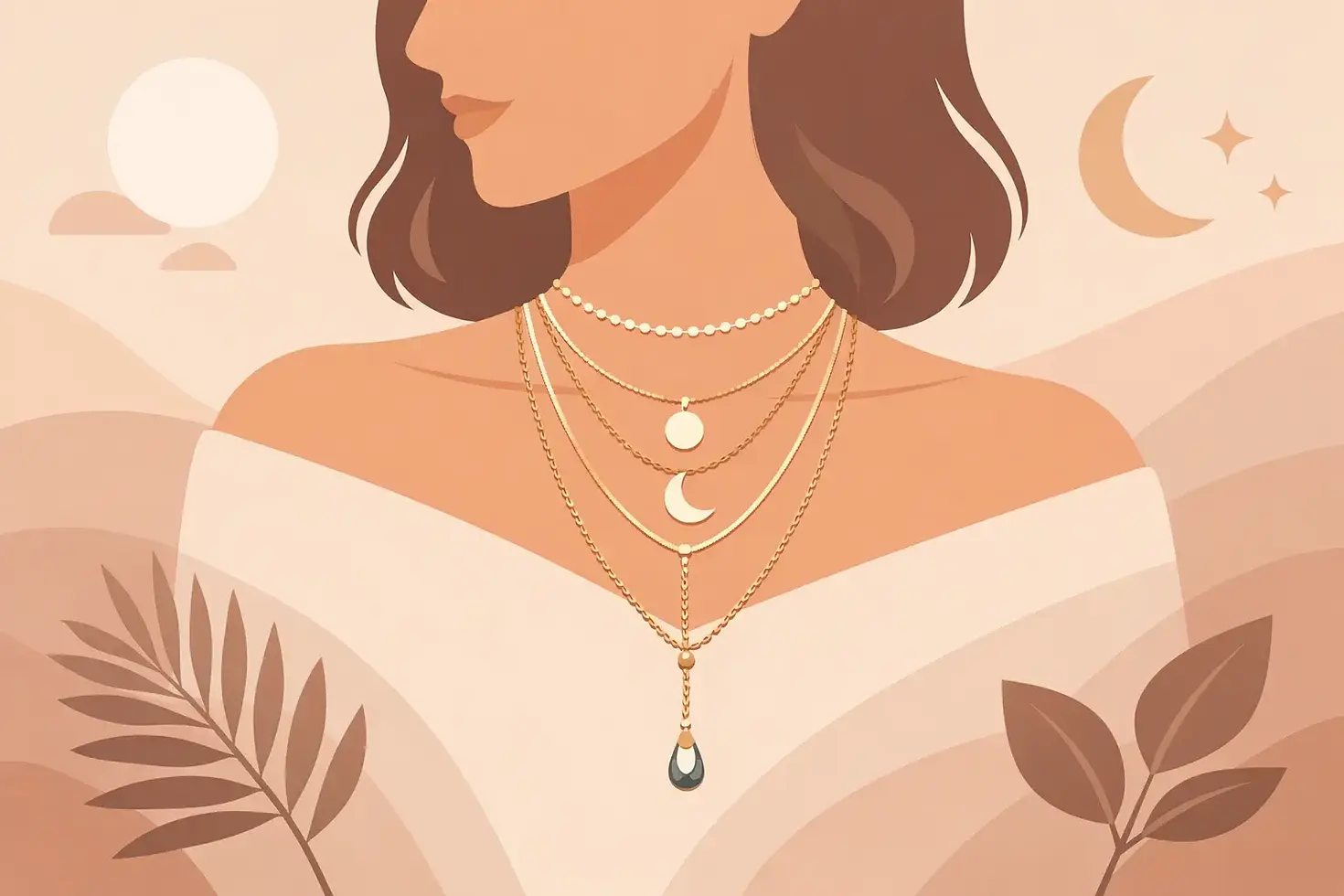
How to Layer Necklaces for Effortless Style
A great necklace stack can change the feel of a simple crew-neck knit, crisp shirt or favourite tee in seconds. Knowing how to layer necklaces is less about following rigid rules and more about creating a combination that feels considered, flattering and distinctly yours. Start with pieces you already love, leave room for contrast, and let the neckline of your outfit lead the way.
The most successful layers look effortless because every detail has a purpose: the lengths do not compete, the pendants sit where they can be seen, and the mix reflects your mood. Some days call for fine gold chains and a subtle initial. Others suit a bolder charm, a touch of colour or a sculptural chain that becomes the focal point.
How to Layer Necklaces Without Tangling
The easiest way to build a necklace stack is from the neckline upwards. Choose your shortest piece first, then add length in measured steps. A gap of around 5 cm between chains usually gives each one its own space, though the exact distance depends on the size of your pendants and the cut of your top.
For a classic starting point, wear a delicate 35-40 cm chain close to the collarbone, a 45-50 cm pendant necklace beneath it, and a longer 55-60 cm piece to draw the eye down. This creates a gentle vertical line that works beautifully with open shirts, V-necks and relaxed knitwear. If your chains are all very fine, a fourth layer can add depth. With chunkier styles, two or three is often enough.
Tangling happens when necklaces are similar in weight, length and movement. Varying the chain style is the simplest fix. Pair a fine cable chain with a slightly more structured curb chain, a beaded detail or a coin pendant. A necklace clasped at a different point can also help, so take a moment to make sure each piece lies flat before you leave the house.
If you know you will be wearing your stack all day, use a necklace separator clasp or choose one pre-layered necklace alongside a single personal piece. There is no prize for making styling difficult. The goal is a look that stays polished from your first coffee to evening plans.
Start With One Piece That Means Something
Rather than choosing three necklaces at random, begin with an anchor piece. It might be a locket, a birthstone, an initial pendant or a charm picked up on holiday. That item gives the stack a point of view and keeps the finished look personal rather than purely decorative.
Once you have your anchor, build around it with quieter supporting pieces. A detailed pendant looks especially striking against a clean, fine chain. If your centrepiece is minimal, introduce interest through texture: a twist chain, tiny pearls, colourful beads or a slim paperclip link can bring it to life.
There is also a place for symmetry, particularly when you prefer timeless elegance. Two delicate chains in the same metal with one small pendant can look refined and intentional. For a more expressive finish, mix a vintage-inspired coin with a contemporary link chain and a playful charm. The balance comes from repeating one element, such as metal tone, scale or colour, so the combination still feels connected.
Choose Lengths for Your Neckline
Your outfit does much of the styling work for you. A round-neck jumper creates a natural frame for a shorter chain and a mid-length pendant, while a V-neck invites a descending arrangement that follows its shape. Try placing the lowest pendant just above the point of the V rather than letting it disappear beneath the fabric.
With a button-down shirt, leave one or two buttons undone and use the opening as your guide. A short chain at the collarbone paired with a pendant inside the open neckline looks polished without feeling over-styled. If the shirt has a bold print, keep the jewellery fine and uncomplicated. Against a plain white shirt, you can be more adventurous with a statement chain or colourful detail.
High necklines call for longer layers. A 60 cm chain over a fine-gauge roll neck can look elegant, especially with one pendant that sits at the centre of the chest. Avoid crowding a high neckline with several short chains, as they can feel busy and may catch on the fabric. One longer piece and a pair of earrings can make just as much impact.
Strapless, square and scoop necklines offer the most room to play. Try a close-fitting choker, a delicate chain at the collarbone and a pendant below. The open skin creates breathing space, so the layers remain visible even when you add a more substantial chain.
Mix Metals With Intention
The old rule that gold and silver should never meet no longer applies. Mixed metals can look fresh, modern and very wearable, but the mix needs a thread of consistency. Start with two pieces in one tone and introduce the other as an accent, rather than choosing equal amounts of every finish at once.
For example, a gold pendant and fine gold chain can be lifted by a silver link necklace, especially if the pendant includes a pale stone or pearl. Alternatively, choose a two-tone piece as the bridge between your metals. This is an easy choice if you regularly switch between silver hoops and gold rings and want your jewellery to work harder across your wardrobe.
Texture matters as much as colour. Highly polished chains worn together can sometimes blend into one another, while a matte charm, organic pearl or hammered pendant gives the eye somewhere to rest. Keep the scale balanced too. One bolder chain paired with two finer pieces looks deliberate; three heavy chains may overwhelm a delicate neckline or ruffle-sleeve top.
Make It Work for Everyday Outfits
For day-to-day dressing, light layers are often the most versatile. A fine chain, a small pendant and one slightly longer textured necklace add finish to denim, a cable-knit sweater or a soft blouse without getting in the way. Choose pieces that feel comfortable when you are moving, working and travelling, rather than saving every necklace for an occasion.
For an evening look, let one element become more dramatic. You might swap a tiny pendant for a gemstone charm, add a chunky chain above a silky camisole, or layer a lariat with a simple collarbone-length necklace. If your dress has embellished shoulders or a high-shine fabric, pull back on the necklace layers and choose one confident piece instead. Jewellery should complement the outfit, not compete with it.
Your earrings, rings and bracelets deserve consideration, too. When your necklaces are the main feature, keep the rest of your jewellery in the same visual family without matching every piece exactly. Small hoops and a signet ring can feel balanced beside a layered stack. With bold drop earrings, a simpler necklace pairing will usually look more composed.
Common Layering Mistakes to Avoid
The biggest mistake is adding pieces simply because you own them. If every necklace has a pendant, a different metal and the same length, none of them gets the attention it deserves. Remove one layer, adjust the spacing, then look again. Editing is often what turns a nice idea into an outfit that feels finished.
Be mindful of proportion. Petite pendants can disappear against an oversized jumper, while large charms may feel heavy with a delicate camisole. It depends on your personal style and the occasion, but a useful guideline is to match the visual weight of the jewellery to the fabric and silhouette. Cosy knits can carry more texture; airy summer tops often suit finer pieces.
Finally, do not overlook care. Wipe necklaces with a soft dry cloth after wear, store them separately where possible, and fasten clasps before placing them away. A little care keeps favourite chains brighter, reduces knots and makes getting dressed feel simpler.
The best layered necklaces do not need to be identical, expensive or perfectly symmetrical. Choose the pieces that make you feel like yourself, test them against the clothes you wear most, and let each new combination add a small, expressive detail to your everyday style.


Comments