
Wardrobe Styling for Effortless Daily Outfits
A great outfit rarely begins with buying something new. It begins with seeing what is already in your wardrobe differently. Wardrobe styling is the quiet art of pairing familiar pieces with intention, so getting dressed feels less like a daily decision and more like a chance to express your mood.
The aim is not to own a rail full of identical basics or to follow every passing trend. It is to create a collection that feels like you: polished enough for a meeting, relaxed enough for coffee, and distinctive enough for the plans that appear after work. A well-styled wardrobe gives you options without asking you to overthink them.
Start with the pieces you reach for
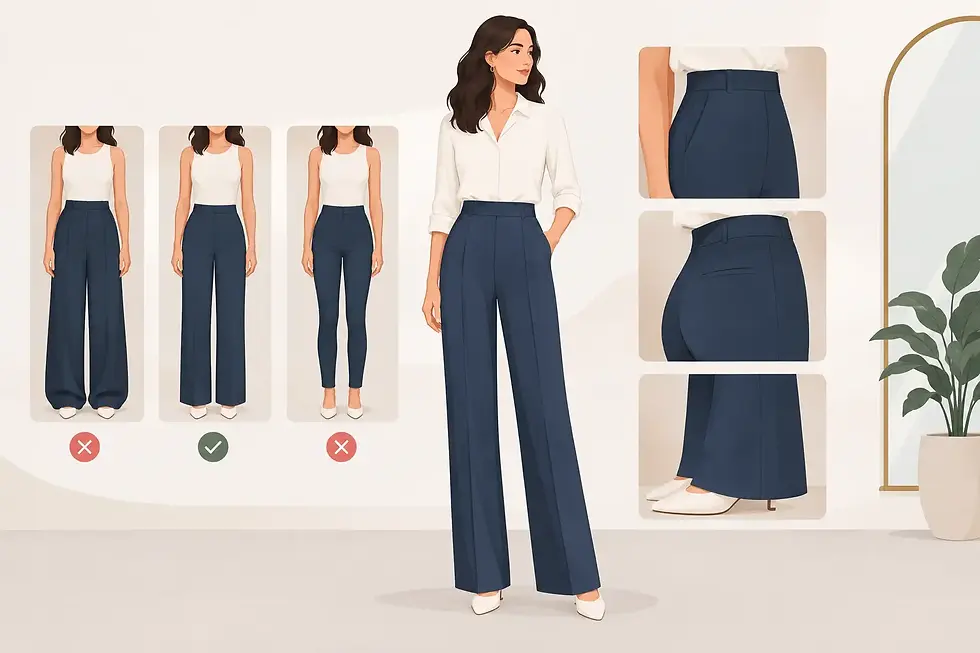
Open your wardrobe and notice the garments you wear on repeat. Perhaps it is a pair of high-waist jeans that always sits just right, a soft cable-knit jumper, tailored trousers, or a blouse that makes even a simple outfit feel considered. These are not the boring pieces. They are the foundation of your personal style.
Choose a core of reliable shapes and colours that work together. Neutral shades such as black, cream, denim blue, camel and grey make getting dressed easier, but they do not need to be your only palette. If red, cobalt, forest green or a playful print gives you energy, make space for it. The most useful colour scheme is one you genuinely want to wear.
Fit matters as much as colour. A beautifully styled look can still feel off if you are constantly adjusting the waistband, pulling at a sleeve or worrying about the neckline. Keep the pieces that let you move comfortably and feel confident from the first mirror check to the journey home.
Use wardrobe styling formulas, not rules
Outfit formulas are helpful because they remove pressure while leaving room for personality. They are not strict rules. Think of them as starting points that you can adapt to your proportions, plans and mood.
For everyday polish, pair straight or skinny jeans with a refined knit and a necklace or scarf that adds contrast. For an elevated casual look, wear trousers with a ruffle-sleeve top, then balance the softness with clean trainers, loafers or a structured bag. When you want something relaxed but intentional, start with a graphic sweatshirt or eco hoodie and add one sharper element, such as dark denim, jewellery or a tailored layer.
The balance is what makes these combinations work. If one piece is oversized, try keeping another closer to the body. If your top has volume, choose a simpler bottom half. If your outfit is built from understated staples, let an accessory bring the visual energy. You do not need every item to make a statement at once.
Build around one focal point
Every outfit benefits from a clear point of view. That may be a dramatic sleeve, an unexpected print, a colourful scarf or an expressive necklace. Once you have chosen the focal point, keep the remaining pieces supportive rather than competitive.
A graphic top, for example, can feel sophisticated with sleek jeans and simple jewellery. A feminine blouse becomes more modern when styled with relaxed denim rather than a matching formal skirt. Contrast keeps an outfit from feeling too precious or too predictable.
This approach also makes shopping more purposeful. Before adding a statement piece to your basket, imagine three ways you would wear it with what you already own. If you can picture it with your favourite jeans, a neutral knit and tailored trousers, it is likely to earn its place.
Make accessories do the expressive work
Accessories are often where a wardrobe becomes personal. They can change the feeling of an outfit faster than an entirely new set of clothes. A fine necklace can make a plain knit feel elegant. A leather bag charm can add a playful note to a classic tote. A printed scarf can introduce colour near the face and make last season’s coat feel fresh again.
There is a trade-off, of course. Too many competing details can distract from an otherwise excellent look. If you are wearing bold earrings, you may prefer a simpler necklace. If your scarf has a bright print, let it take the lead and choose quieter jewellery. Styling is less about piling on and more about choosing the detail that says what you want it to say.
Try creating a small accessory edit that lives where you can see it. A few necklaces, scarves and finishing pieces near your mirror make it easier to experiment before you leave. The best accessory is not necessarily the most dramatic one. It is the one that makes the whole outfit feel more like yours.
Dress for the occasion without losing yourself
Versatility does not mean dressing the same way everywhere. It means having a style language that travels with you from one setting to another. Your daytime denim can become dinner-ready with a polished top, layered jewellery and a change of shoes. A knitwear look can feel office-appropriate with trousers and feel weekend-ready when paired with relaxed jeans.
For work, consider structure, comfort and confidence in equal measure. Choose silhouettes that hold their shape and layers that make sense for changing temperatures. For social plans, bring in texture, a bolder colour or an accessory with a little personality. For travelling, build around comfortable trousers or denim, a breathable top and a layer you will be happy to wear in photographs as well as on the train.
You never need to erase your personal style to look appropriate. If you love feminine details, bring them into your practical outfits through a ruffle, a delicate necklace or a soft knit. If you are drawn to more graphic, contemporary pieces, let one appear alongside classic staples. The outfit should suit the occasion, but it should still look like it belongs to you.
Refresh your wardrobe with intention
A wardrobe refresh does not require a complete reset. Often, one considered addition creates new combinations across pieces you already own. A versatile jumper can soften tailored trousers and sharpen denim. A distinctive top can give familiar jeans a new purpose. Jewellery and scarves can refresh the foundations you never want to replace.
When you do shop, look beyond the single outfit in the product image. Ask whether the fabric, colour and shape complement your existing favourites. Consider your real routines too. A beautiful piece that only works for an imaginary calendar is less valuable than one you can wear next week, then style differently the week after.
It also helps to edit with kindness. Set aside anything that no longer fits your life, feels uncomfortable or has become difficult to style. This is not about creating a tiny, restrictive wardrobe. It is about giving the pieces you love enough room to be seen and worn.
Let your wardrobe evolve with you
Personal style is allowed to change. The colours you want to wear, the fits that feel right and the occasions you dress for will shift over time. Rather than chasing reinvention, notice the changes and make small adjustments. Add a more expressive accessory. Try a new silhouette with trusted denim. Pair a timeless knit with something playful.
The most successful wardrobe styling feels effortless because it is built on honest choices, not pressure to look like someone else. Start with what makes you feel composed, add what makes you feel interesting, and leave enough space for a little surprise when you get dressed tomorrow.


Comments